Why Lighting affects Camera Techniques for a Moving Image?


Lighting is built up of a Key and Fill Light, Key light is the main light source in the scene while the Fill Light counters the shadows cast by the Key Light by filling in the shadows and creating exposure from the contrast of the two.
Lighting is important to a moving image as it not only tells the audience where they need to look but establishes the tone and emotion of the scene.
An example of this is in film Sunshine of the Spotless Mind (2004) which uses lighting to establish the mood of the central character Joel, as one shows his fears of losing the last memory of his former girlfriend while the other shows a happy memory of when he first started dating her. One uses shadows to show loom and gloom of this dramatic situation while the other uses warm natural light with no contrast to create an image out of a storybook.
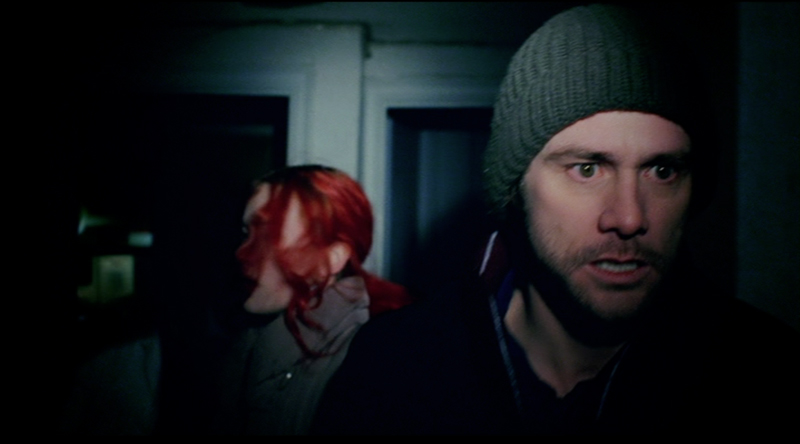


Lighting can also provide much more to a film, in John Alton's book "Painting with Light" as a cinematographer, he also outlines the various uses of light in a scene and its importance compared to other filming techniques.
"Lighting strives to bring out the following values:
1. Orientation – to enable the audience to see where the story is taking place.
2. Mood or feeling (season of year and time of day).
3. Pictorial beauty, aesthetic pleasure.
4. Depth, perspective, third-dimensional illusion.”
List of Lighting Equipment and Setups I would use for the following Scenarios:
"A Small Documentary Where Portability is Paramount"
If I was creating a small documentary where portability is necessary I would invest in some Quasar Tube Lights, specifically the smaller Quaser Science Q-LED-X-1'(12") Crossfade Linear LED Lamp Light Tube 240VAC. As it provides portable lightning positioning due to there built-in magnetic and they are battery powered and provide a strong light source for an interview that can be used as a sunlight replacement due to colour flexibility depending on which type you purchase. They also can fit in most bags.
With there small size and flexibility you can attach these to cars, cameras and even your subjects to be able to adapt and capture footage on the go quick and easy without much setup time. The downside is that if I want my subjects to be well lit from each angle I will have to invest in multiple of these lights which can be expensive for a small documentary, where the budget is already low.

"Shooting a ‘Talking Head’ Style Interview"
I would use book lighting where I bounce my lighting from in this case a Yongnouo LED Light of a bounce material into a diffusion fabric/material, in this case, I would use a whiteboard to off and diffuse through the fabric. Giving my talking subject the most flattering and comfortable lighting throughout the interview, so my subject can work through the shooting day and allows me to adjust the lighting intensity through my fabric if my interview turns into darker or lighter themes. My lighting can then adjust accordingly. The pros of using book lightning setup are that it is easy to set up and creates a clear light on our subject, however, it makes the interviews feel more controlled and artificial so it loses the sense realism that a naturally lit setup could have provided and depending on the type of documentary this could be a deal-breaker as it feels faked/forced.

"A ‘Night-time’ Shoot"
If I was going to do a night shoot I would have both a key and fill light due to the fact that I will need to counter the contrast the shadows of my subject due to the lack of natural lighting. I would probably use an Aputure Credit Card Light in combination with tripods, this would allow me enough mobility to move around the outdoors at night due to the lights small size. However, if I was attempting to keep my subject unaware of the camera, for example, a nature documentary, I would have to invest in a night vision camera rather than use a lighting setup. The pros of having a more portable lighting setup are that I can position myself outside at night more easily if the shoot does take place outside. The cons, however, is that due to my bringing portable equipment rather than intense lighting equipment is that my subject won't be sufficiently lit in the night time environment.


No comments:
Post a Comment