During the various units of my course, I have used research methods to give clear and accurate evidence to my various arguments and project production choices for my work to be treated as the industry standard by making it comply with the most effective methods of the creation process that helped me accurately appeal to my audiences.
In this post, I will be going through and evaluating how effectively I used these methods and how I would change them in future projects to better my work to industry standard.
Music Video Analysis and Examples
I have analysed music videos and how they are effective by structuring them into a set of common troupes/aspects defined by Andrew Goodwin and Carol Vernalis in these videos.
Thought Beats
(Inner Interpretation, how it is effected during the music video)
Narrative and Performace
(Story of the video portrayed through the actors and visuals)
The Star Image
(Celebrity Culture/Brand)
Relationship between Visuals and the Music
(How the music affects the visuals and vice versa)
Technical Aspects of a Music Video
(Use of Mise en Scene, Camera, etc.)
Example Analysis:
Vance Joy - 'Riptide' Official Video
Thought Beats
The music video uses matching imagery with the lyrics, allowing my inner interpretation to be at the forefront of the visuals. For example, when the song repeats the word "Riptide" I think of a water tide/body of water and the video compliments that by actually showing a water tide in synch with the lyric. This is showcased throughout the music video as each line has been given a visual equivalent sometimes with what you expect but as the video goes on the visual elements become more surprising.
In the beginning, the lyrics are showcased with flat simple imagery but the later imagery is more horror related as they use the genre's conventions like low key lighting with use semi-violent imagery for example the line "left-hand man" in the later sections becomes represented by a knife going into someone's left hand and a gun in someone's left hand, while the beginning it was represented by someone holding a microphone in their left hand.
Narrative and Performace
The music videos narrative use doesn't simply follow the linear interpretation of the lyrics which seems to be about a man being in love with a woman as he wants to be her "left-hand man" most likely meaning he wants to marry her and how he is worried about her accepting the proposal as he is afraid of her "singing the words wrong". But the music video uses imagery to tell its narrative which in my first viewing I thought was a much darker narrative, as the imagery becomes sinister as seems that the man has kidnapped the woman he is in love with or is at the very least abusing her. This is due to the images of the singer whose makeup is slowly being scruffed and eventually appears to start bleeding.
The narrative also has overall intertextuality to American New Wave cinema as the aesthetic of the video visually looks and feels like an American movie from the '70s while the lyrics and the imagery match films of this period, the most notable reference example being Midnight Cowboy the lyrics and imagery of a man moving to new york and them being a "cowboy running from himself" perfectly summarises the film. Overall the narrative in this music video seems more interpretative and up to the viewer as you can see it as a man's sinister obsession with a woman or simply a love story.
Overall the music video is more experimental as it doesn't follow normal performance conventions as the band is not shown with instrumentals as this music video doesn't follow the genres of stadium/live performance, however, the female singer does mime the lyrics but rather than creating the energy of the band performing live that you would normally get from this technique it creates a sense of dread which built into my first dark impression of the video.
The Star Image
The music video lacks the normal notifiers of star iconography, as the video does not include them performing the song nor does it further to my knowledge any furthering of the artists brand. However, the artist Vance Joy does make an appearance within it as the director of a movie filming a woman on the beach, this can be interpreted as meta-text this being his vision that he has created as the auteur of the song.
Overall I think the music video captures the indie music style the artist Vance Joy represents by using mise en scene and the aesthetic of American New Wave Cinema to create that indie none industry feeling that those films evoked to represent their style of indie more retro music.
Relationship between Visuals and the Music
The music video uses the rhythm/beat of the music along with matching each line of the lyrics to the imagery on screen, this creates a clear and engaging visual narrative for the viewer to engage with. The tone of the images also works well with the music as the song itself is upbeat and the use of high key lit imagery as we see the natural beauty of various settings in golden sunlight such as deserts and beaches, however, the visuals also match the darker tine and feeling the lyrics evoke as we see these pieces of high key imagery slowly declines inconsistency in exchange of low key horror movie style imagery I have already talked about.
I would argue that the lyrics themselves evoke more of a feeling of heartbreak and a longing for love, which I feel is only partially achieved in the music video as we see consistent imagery of the same blonde woman being elusive towards the camera/the audience as she keeps running away from the camera, but it eventually abandons this character to focus on visuals rather than completing the narrative of this woman that is seen through the video.
Technical Aspects of a Music Video
The video successfully evokes the 70's that it is trying to replicate as the use of mise en scene reminds you of films like Easy Rider (1969) and Midnight Cowboy (1969), with the use of brown goldern colours to the retro props/costumes like the cowboy outfit and the passport despite being filmed far after this era of cinema. The use of setting also achieves this as it uses open naturally lit areas, which represents the low budget indie filmmaking that was coming out of the American new wave of the '70s as they used more of a gorilla film making style as they moved away from filming on sets to real/existing spaces. The use of cinematography perfectly demonstrates a link to the lyrics as closeups are used to showcase visual representations like "all my friends are turning green" being visualised by an extreme closeup on a dollar bill.
The use of camera movement provides an engaging experience, the use of hidden cuts in panning shots most notable to link the lyrics like "I swear she is destined for the screen" being linked by two whip pans as they showcase an actress being filmed by a film crew.
While the video does lack editing other than the use of match cuts to link the lyrics I feel that this adds to the tone/aesthetic of the video as it feels very tactile like the films of the '70s rather than the digital Imax feeling most modern films suffer from.
Overall, the music video shows a great use of techniques for mise en scene, cinematography as well as editing. It creates engagement with the audience by using these methods to create an intriguing visual narrative that evokes the feelings the song represents. I feel it could have attempted to use more creativity in its editing and in the types of shots it uses as it often repeats, which is common in a music video but it achieved its goal of creating a video that not only makes me want to keep watching and listening.
Evaluation
The music video for Riptide demonstrates the troupes of music videos and uses them effectively to captivate the audience. The use of editing to the beat and visual and lyrical matching with each cut makes it engaging and easy to follow, the use of this repeated imagery does make the video slightly repetitive but the use of varied and detailed prop design and cinematography makes the video engaging. I would say that it does successfully achieve its goal of attracting and holding the attention of the viewers while also creating a sequence that matches the feel and aesthetic the song evokes in the listener.
It could be better improved by completing the narrative it starts with the blonde woman, as I feel that would better engagement by having a linear character-based narrative rather than just a visual one, but as a music video, it is completely acceptable to have these gaps as they can sometimes encourage more viewership as the audience theories the incomplete answers.
How will this Affect my Final Music Video?
The music videos I have examined here have shown me two ways to treat narrative in my music video, to disregard it in favour of my own story and use the emotion of the song to match it with the tone I want to represent. Or to use the narrative to create a visual matching editing style that acts on the beat and rhythm of the song.
I will try and use narrative in both methods, as I think for a truly effective video I want to create a narrative that emotionally connects to the song as well as visually. The use of actors and talent rather than the artist themselves performing in these videos also makes me want to include actors/talent in my own video to emotionally engage with the audience, the use of Walken in the Fatboy Slim video has shown me the benefits and engagement a simple dance performance can have on a music video and makes me want to include that in my performance due to its easy execution and its clear effect on engagement. My video will also be aiming to create a more comedic feeling so having a goofy dance performance akin to Walken will ensure this is achieved in the final product.
Conclusion
My Analysis of three different music videos as well as promotional videos for the appropriate projects was helpful in the production process as it allowed me to see the best and the worst parts of these examples and implement them into my work, allowing me to create a video that best fit with my target audience/demographic and that could be achieved on my limited budget and schedule.
While my analysis was in-depth and filled with insight on the video I feel I could have better emphasised the practical implications of my analysis throughout, for example how I could use Vance Joys "Riptide" Music Video technique of music and imagery match editing to create narrative rather than actually include a performance-based narrative with actors, etc. Saving on budget by making actors an unnecessary cost. Overall, I would say that my analysis gave me in-depth information on the projects that heavily influenced my final ideas for the products during the course.
Music Video Theory
I researched the music video theories of Andrew Goodwin and Carol Vernalis to better understand what to include in a music video and what separates them from one another. It also allowed me to obtain a recipe on how to create a successful music video that appealed to my target audience with specific techniques and examples.
Andrew Goodwin
Andrew Goodwin in his books "Dancing in the Distraction Factory (1992)" and "On Record: Rock, Pop and the Written Word (1990)" summarising them it explains that music videos use the following 3 methods to showcase a relationship between visuals and lyrics, these methods are to create engagement in the audience whether it focuses on the song and its contents itself or if it disregards them in favour of bizarre imagery.
Illustrative
The literally meaning of the lyrics is shown in visual form, usually using rhythm in the editing process with the lyrics to visual elements of mise en scene.
The Weather Girls - It's Raining Men (Video)
This video is an example of illustrative as we see a weather forecast and have men literally rain from the sky like in the lyrics of the song, this straightforward technique is common in early music videos as they had little experience with experimenting with the genre and can also be seen in Whitney Houstons "I Want to Dance with Somebody" and many other 80's artists.
Disjunction/Contradicting
Music videos ignore the lyrics of the song and their original meaning and create a whole new narrative, often using experimental techniques.
Imagine Dragons - Radioactive
This music video is an example of contradiction as it takes the lyrics of the song and applies them to an underground fighting ring of puppets, which could not be further from the original meaning of the song but it continues to work as it uses the pace of the song to build its story instead of the lyrics. But creates an effective engaging underdog story where we see a villain meet his dues.
Amplification
Videos that don't directly match the lyrics of the song similar to disjunction however it amplifies the tone and enhances the feelings/theoretical meaning the song evokes usually using the performance of the artist.
Amy Macdonald - This Is The Life (Official Video)
The song is an example of Amplification as it doesn't match the lyrics of the song but the overall emotion of the piece as Amy Macdonald gives an almost mournful performance as we see nostalgic imagery of photography and brief drunken nights of friends as the song reflects on memories, the lyrics "Where you Going to Sleep Tonight" ae repeated as it both shows a warning of there lifestyle and a reflection of the lifestyle of fame and youth.
Specific Techniques:
Cutting Visuals in Time to Music
Music videos use this all the time most common in Illustrative music videos as the imagery relates to the music, in Vance Joys "Riptide" we can see this technique best illustrated as we see each line of lyrics have a displayed use of imagery, from the lyrics "right-hand man" displaying a literally right hand on the screen to "all my friends are turning green" displaying a dollar bill.
Vance Joy - 'Riptide' Official Video
Genre Exists:
Music videos like films and music themselves have distinct genre with their own conventions/techniques.
Performance
When we see the artists perform their music "live" during the music video, this can be split into two different sub-genres:
Stadium Performance
A stadium performance is when the artists perform in a stadium usually in front of live audience members and might be actual concert footage, to capture the energy of a live performance of the artist.
The Strokes - Last Nite (Official Music Video)
Studio Performance
Studio performance is when the artist performs the music on a set in private to the camera most likely without a live audience but still to showcase the talent of the artist.
The Dø 'Gonna Be Sick!' - Live Session at Studio Pigalle
Location
A location music video is when the music video takes place at a specific location, for example, you might have the artist perform in the woods, usually somewhere visually distinct that reflects the mood/tone of the music.
OneRepublic - Counting Stars (Official Music Video)
Narrative
Narrative music videos follow a narrative/story structure, this can be related to the lyrics/music or not related at all but there is a story with a beginning middle and end.
Taylor Swift - We Are Never Ever Getting Back Together
Conceptual/Experimental
This genre mixes the style techniques of music video usually using experimental lighting and camera techniques that create a feeling/emotion rather than a black and white easy to understand narrative.
MGMT - Kids (Video with Fire Intro)
Artistic Close-Up
How the artist is portrayed in the music video using an assortment of techniques usually in their intended marketing aesthetic.
Artistic Branding
The unique selling point of the artist that connects with their fans/customers, this can be a distinct style like Lady Gaga who uses bizarre fashion to distinguish herself to the audience or it can the tone/emotions the artist usually creates in the listener.
Lady Gaga - Bad Romance (Official Music Video)
Celebrity Culture
How all celebrities have become products/marketing tools, from audience interest in their personal lives and have the culture at large see them and relates to them. For example, in Taylor Swifts Bad Blood she sings about the online conflicts with the artist Katy Perry and used that to market this song and is clearly used in the "narrative" of the music video.
Taylor Swift - Bad Blood ft. Kendrick Lamar
Artistic Portrayal
How the artist is seen in their online/celebrity persona, so music videos display how these artists represent themselves. Billie Eilish in her music videos does not wear or display the typical female artist's style lacking any voyeurism or sexualisation and instead her personal displays that of comfortable tomboy aesthetic, which she displays in all her music videos.
Billie Eilish - bad guy
Implications on Looking Good
Artists typically within their music videos and overall as celebrities try and look physically attractive to be seen as more marketable and due to perfectionism of attractiveness celebrity culture has forced onto them. This usually has music videos breakdown and criticise these ideas of attractiveness like in lily Allens music video of 22, or as common with artists typically do use their attractiveness to better sell their music.
Lily Allen | 22 (Official Video)
Star Iconography
How the artist is visually represented to the general public, with distinct values and methods that separate them from other artists.
Branding/Brand Values/Unique Selling Points
How the artist has been branded by their marketing team and how this makes them more sellable to an audience and keeps them coming back, for example, Childish Gambino uses distinct and experimental techniques in his music video that keeps him separate from his peers including his recent use of politics in his songs that showcase his brand values on the black lives matter movement.
Childish Gambino - This Is America (Official Video)
Style
How the artist creates a distinct style in their music videos that intrigues the audience and relate to their brand, for example, Prince created a gender-fluid style in his music videos and his brand as an artist by famously dressing in typically feminine style of clothing, similar to that of David Bowie, these artists broke down the typical ideas of masculinity and that's what made them so engaging and marketable as well as there famously iconic experimental types of music and music videos.
Prince & The Revolution - Kiss (Official Music Video)
Looking and Voyeurism
How an artist is framed using the camera of the music video to create a more personal feeling between them and the audience and how this image can sexualise them.
Revealing Exhibtionsim
Music videos especially those with female artists have them in positions of nudity or near-nudity, this can be empowering or sexualising depending on the director's/artists goal, for example, Janelle Monae uses the techniques of Prince to create a distinct style but uses revealing/sexualised clothing as empowering rather than simply a selling point as it displays her openness about her sexuality as an open pansexual.
Janelle Monáe – Make Me Feel [Official Music Video]
An Intimate Location
Intimate locations like a bedroom are used to create a personal connection to the artist as it is like the audience is looking beyond the private curtain of their lives to the public, in Rihanna's music video for "Stay" the camera uses intimate camera language of closeups as we see her vulnerable in a bathtub which creates a sense of intimacy between her and the viewer from the location that engages the audience.
Rihanna - Stay ft. Mikky Ekko
Frame within a Frame
When the subject of cinematography is framed within the mise en scene as well as by the camera, creating a frame within a frame effect creating a more visually engaging scene that is usually used to highlight the artist.
Taylor Swift - Shake It Off
Janelle Monáe - I Like That [Official Music Video]
Male Gaze
In music videos they sometimes use the male gaze to better market to men, this can be seen using fragmentation as the female form in music videos is highlighted and sexualized with closeups on intimate areas of the female form, this can be used by all genders of artists as they can both sexualise themselves to better appeal to straight male audiences or straight male artists can have women models in their music videos (this is most infamously used in early Rap Music/Culture and still is). This can be seen through the career of Brittany Spears as she is one of the most famously sexualized female artists of all time.
Britney Spears - Womanizer (Director's Cut)
Intertextuality
When a music video uses references to other forms of media in their music videos, this can be films, TV and even other music videos. This can be to create a certain style of music or to create the desired effect the reference previously invoked in their audience. For example, Thriller by Micheal Jackson one of the most famous music videos of all time has an intertextual reference to "An American Werewolf in London" which inspires the opening to the video with Michael turning into a werewolf. Even using the same director of the film John Landis as they create an obvious ode to George A Romero's Zombie films with the use of particular makeup effects of the zombie dancers.
Michael Jackson - Thriller (Official Video)
Pastiche/Brand Synergy
Intertextuality could also be used in music videos when songs share traits of other art pieces/works, for example, the Heavy Metal genre of music is heavily associated with the horror genre by sharing a similar fanbase and the artists even take the style of their costumes and their performances from classic horror movies like The Texas Chainsaw Massacre and Hellraiser with the character Leather Face and Pinhead being referenced in the band's masks, this is most clearly seen in the work of the Band Slipnots who wears masks clearly inspired by these horror films.
Slipknot - Duality [OFFICIAL VIDEO]
How Will This Effect My Music Video?
Overall, I think Andrew Goodwin's theory on the structure of music videos has affected how I will create my own music video, as I think I want to follow the creation of a music video that is more experimental and less narrative-based by using the Amplification and Contradicting style and plan to use my knowledge of films to create something that I feel will be visually engaging with the audience rather than being based on a narrative.
Carol Vernalis
Similar to the theory purposed by Andrew Goodwin Carol Vermallis in her books "Experiencing Music Video (2004)" and "Unruly Media: YouTube, Music Video, and the New Digital Cinema (2013)" she considers editing, continuity, their meaning and the role they play within music videos. The effect of sound and imagery synchronization as the lyrics line up with visual elements of mise en scene and the general impact of editing within a music video affects the audience.
Her theory can be broken down into four main areas that have a significant effect on the final music video product.
Narrative
Music videos are a visual adaptation of the narrative, meaning we see the reflection of the music (typically the lyrics) visually. This narrative can be left unfinished which is very common in music videos and it will allow the audience to apply their own meaning to it. Music videos usually have a force that keeps the audience's engagement with the video, this doesn't necessarily mean that the narrative is the main momentum driving the video forward, it can be many different elements such as the music itself the editing, etc.
The narrative of a music video Carol Vernallis explains has many different conventions that are used and recycled in music videos.
Conventions:
The video uses imagery to respond to the music
No needed balance between narrative and performance
Common for incomplete narrative
The structure may be unorganised from the audience's perspective
Something keeps the video's momentum moving forward which isn't the primary narrative, this can be music, performance or other elements.
It may not have an easily understood meaning for the ending of a music video and typically lacks closure within its narrative.
Questions are posed to the audience but do not answer them and these questions
Example/Breakdown
The Killers - Mr Brightside (Official Music Video)
Mr Brightside by The Killers was released in 2004, directed by Sophie Muller the video follows the narrative of the lyrics which display a man longing for the love of a woman and despite looking on the Brightside he cannot be with her.
Lead vocalist Brandon Flowers describes the woman he loves in his mind having her dress taking off by another man and him saying "I Just Can't Look it's Killing me" as he feels sick and jealous further by the lines "Jealousy turning saints into the sea", showing the hurt this love has put him through that he is contemplating suicide (jumping into the sea) but him saying this is the "price he pays" showcases his devotion to her.
However, as the music video goes on the director uses the dis-organized structure of the narrative as we go back and forth between the stadium performance of the band and the narrative of Brandon losing the girl to another man in a game of checkers this break continuity is a common convention in music videos and this use of 1700's style of dresses mixed with early 2000's fashion makes the story feel like a period piece like the star crossed lovers of Romeo and Juliet and then it ends, with an unfinished story of a man losing the woman he loves to another man. This videos consistent use of conventions outlined by Veranillis theory on Narratives, like unfinished narratives and a continuity breaking mixed order that uses the longing narrative of the protagonist as the driving force to keep the audience engaged with the visuals, this overall supports Veranillis theory on music videos.
Editing
Music video editing is one of the most important elements of a music video, it can break or follow conventions it can disregard continuative editing and can be a background effect or the main idea the video is based on rather than a usual narrative style and according to Vernaillis its 4 most distinguished methods/techniques are the use of Jump Cuts and Juxtaposing Frames/imagery, Breaking the 30 Degree Rule, use of cutting lyrics to the beat of the music.
Conventions:
Editing style may match the musical language and the pace/beat of the song itself
Videos dismantle/disregard the many rules of continuity editing
Editing is not subtle as they want attention rather than immersion
Example/Breakdown
M.I.A. - Paper Planes
Directed by Bernard Gourley for the 2009 music video of the 2007 song, this video showcases the conventions of editing within music videos. The song follows the artist of M.I.And as we see her walking around London and working in the back of a food truck, the use of conventions like the use of matching the beat of the song with the edits on the screen. This is especially present when the song uses the sounds of gunshots and imagery of a cash register sliding open to the lyrics "take your money" this use of obvious imagery including closeups on pound notes drives home to the audience the themes of poverty present in the song, as both the lyrics and the imagery showcase the struggles of working-class life in the UK.
The editing also follows the troupe of disregarding continuity as the location of M.I.A appears back and forth between locations and sequences in a non-linear narrative, possible emphasizing the endless rhythm of working-class poverty that the song highlights. As M.I.A is trapped in a loop of earning money to survive. This use of editing follows the conventions I listed above as it keeps the engagement of the audience by using rhythm-based editing style and obvious imagery sending a clear message and theme to the audience as it disregards the rules of continuity editing.
Camera Movement and Framing
According to Vernallis, "the establishing shot is one of many main elements used in music videos" (2013) as highlighting the subject typically the artist is the main feature of music videos by using master shots, as well as camera movement that goes in time with the music. Depending on its genre how the artist is framed is subject to change to best fit the style of the piece and the artists brand/image.
Conventions:
The camera language of a music video is used more extremes than other visual mediums like film.
Framing and camera language is consistent throughout the video, often being an original concept to that video. Especially with the use of frames within frames.
Cameras are in time with their music especially with their movement
Frequent use of longshots showcasing all the artists performing (master shot) and intimate close-ups
Example/Breakdown
Thee Sacred Souls - Weak for your Love (Official Video)
Directed by Alex Guerin and released in 2020, this video for Thee Sacred Souls "Weak for your Love" is a great example of the Camera Movement and Framing conventions of music videos as it consistently uses longshots to display the performances of the band as we see the lead vocalist Josh Lane dance and sing to a woman in a window. This lack of fear of the extremes of cinematography with these consistent extreme longshots/master shots to highlight performances along with the use of Technicolour style aspect ratio (2.35:1) declares this a clear example of Vernallis's theory as this original concept of framing within the video stays consistent throughout. Along with the pace of camera movement perfectly mimicking the rhythm of the song, this is a textbook example of the conventions of camera movement/framing in music videos according to Carol Vernallis.
Diegesis
Diegesis is another essential element to music videos according to Vernallis as it acts as the overarching meaning to a music video separate from the main plot/narrative, it often is created/emphasized using repeated imagery. However, unlike in other mediums, the action used to create the diegesis is often left unfinished, this is usually to give room for audiences to create their own opinions on the diegesis's meaning.
Conventions:
Revealed slowly in pieces rather than all at once
Actions/Sequences may not be complete
Individuals and inanimate objects move in time to the music
There are gaps within the audience knowledge/understanding of the Diegesis
Repeating techniques and methods to showcase the Diegesis
Example/Breakdown
Lily Allen | Not Fair (Official Video)
Directed by Melina Matsoukas and released in 2009, the music video for the song "Not Fair" by Lily Allen uses the conventions of the diegesis. The main narrative of the music video follows a performance of Lily Allen on a stage at what appears to be a parody of country music performances in the 1950s, the song is about a selfish lover who puts his needs above her own. While this music video and the lyrics might be thought of as being surface level about the bitterness about an ex-lover, the conventions of the diegesis are used to imply deeper overarching meaning to the music video and the song as a whole. It is revealed slowly throughout the video as we begin to see the reactions via closeups on the male band members to the lyrics of the song as it seems each male member thinks that she's talking about them as we fill in the gaps with our lack of knowledge.
Lily Allen and the director create a diegesis of a message about sexism towards women as the use of the conservative country music setting applied to the confidence of Lily Allens performs as she is dismissed by her bandmates as they roll their eyes and shake their heads in combination with the robotic emotionless of the found footage presenter shows how not fair it is for a woman in the entertainment industry and society as the men disregard the issues she is singing about in the song.
This slow reveal using repeated methods to highlight the diegesis by looking at the performances makes this a clear example of Vernallis theory on diegesis.
How will this Affect my Own Music Video?
This has affected my music video by expanding my knowledge on the expectations of the music video genre, I think for my music video I will lean into the disorganized/unstructured use of narrative, as I think this will be easier to achieve than having a fully realized story with my limited resources. I also think I should have a focus on the Diegesis of my music video and try and break down what I want my music video to say and what I want to give my audience to the intended meaning of it. As I think this will lead to more engagement as my audience wants to figure out what it all means and still allows me to create more experimental imagery and use unorthodox techniques.
Conclusion (how it can be improved?/Evaluation)
Breaking down and evaluating these theories allowed me to categorize my final music video and how I could execute it, as I decided to create a more illustrative and experimental video that focused on an artists performance rather than star iconography and sexualisation. By researching and breaking down these theories I learnt the values of the techniques associated with the different genres of music video and gave me a clear focus and instruction on how to execute it. While I wish I could have tested and created my own tests of these various techniques in the pre-production stage to see how they could have worked with my video I feel the spontaneous atmosphere during the shoot helped with my final product success.
Focus Groups/Questionnaires
I researched how best to create Focus Groups and Questionnaires, as I weighed the pros and cons of each method to see which variant best first my projects (Music Video/Promotional Video).
What to Consider When Collecting Research:
Validity
The validity of a questionnaire and any other research method is how accurate the data collected from it is measured. This is important to consider as if you cannot accurately measure the data you have collected it is useless as it cannot be applied in any way. For example, if the government did a survey for what people in the UK will be negatively affected by Brexit and had no way of accurately measuring/analysing that data. They would have no way of applying support to those people who needed it.
Reliability
The reliability of a questionnaire and any other research method is the state in which it yields/provides stable, consistent data. Using the same unit of measurement to get consistent results, for example, a questionnaire, you would need each questionnaire to have the same questions because otherwise, the data would be useless.
Triangulation
Triangulation when using research methods is the use of multiple sources of data/data collection to give more validity to your research collected in a study. This is also used when allowing multiple evaluators to break down and analyze the response of respondents in the study. Important when creating a questionnaire as having more data to back up what you have collected from your questionnaire gives more evidence that your data is reliable/accurate.
Pilot Study
Referring to a significant stage of a researching method. The reason for using a pilot study is to showcase if it can be used on a grander scale. This stops you from overspending when collecting data and finding ways of simplifying your research method, in this case, a questionnaire to better be analysed in the future.
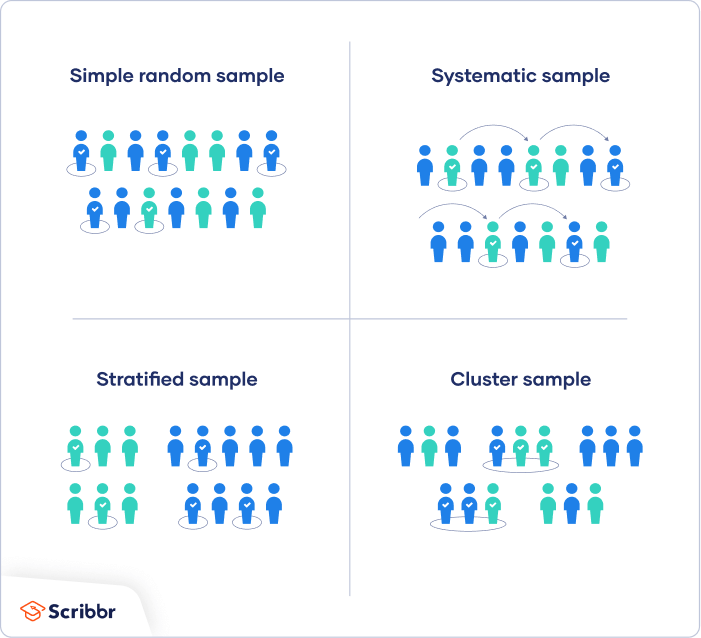
Sample
Sample refers to a group (usually of people but can be objects, animals, etc.) from a larger population to measure. This should represent the population of what you intended to get data from for you to simplify and apply findings to the larger population in the post. Allowing you to gather data for a city with only a fraction of the population and cost. Sample needs to be considered to give your data validity as if the sample is not accurate to the respondents you want to study your data will become useless.
Types of Sampling Styles:
Simple Random
Simple random is when respondents are randomly selected from the desired population where everyone within the population has the same chance of being selected.
This is the least complicated method of selecting a sample as there are little to no requirements and gives the research method good viability as the sample is completely random.
Systematic
The systematic sample selecting method is when respondents are selected from the larger population size randomly selected starting point but from a fixed periodic interval. Called the sampling interval it is created by dividing the larger population size by the wanted sample size despite this is considered random despite the selection of population being done in advance due to the random starting point.
Stratified
Stratified is used to select a sample that takes people from different groups (ethnicity, social groups etc.) if the groups are uneven the people or whatever the groups consist of will be evenly distributed into the final sample as each group will give an amount proportional to the desired sample size.
Cluster
The cluster method separates the population into smaller groups (Clusters). Randomly selected from these clusters to create a sample, used to study large populations especially ones with unusual geographically population locations that vary drastically. Most often they use existing units like cities, universities.
Once the questionnaire has been created you must then distributed it, there are many ways to distribute a questionnaire that can be beneficial to some demographics of people depending on age, social standing etc.
Two-Way
A two-way focus group is when you have two groups of respondents, one group answers the questions and have discussions given and promoted by the moderator while the other group listens/spectates the other. This supposedly grants the spectating group more insight and understanding, giving them different reactions that a single group couldn't achieve as they expand the discussions from the other group.
Dual-Moderator
A focus group with a dual moderator is when you have two moderators, one keeps the respondents/participants on track with as little distraction as possible while the other makes sure all topics/questions are covered for the sake of collecting accurate and relevant data, this usually results in a more productive session as it keeps distraction to a minimum and establishes a goal of discussion topics that should be covered in the allotted time frame.
Dueling-Moderator
The method of duelling moderation who argue the opposite point to the ones decided on by the focus group and through these conflicting opinions, you can create new ways of thinking and help the participants clearly argue and define their points so it can be better understood in the reviewing of data process.
Respondent-Moderator
Respondent moderation is when a member of the focus group leads them as the moderator, this has been known to create a less normal environment and will hopefully give more honest data and generate opinions and ideas that a more formal straightforward moderator wouldn't achieve.
Mini/Smaller Focus Group
A smaller sized focus group (around four to five) creates a less formal intimate environment that creates a more trusting area for the participants, to be honest with each other leading to more engaging discussions from all subjects rather than the more outwardly social/extroverted ones that dominate the larger focus group size.
Online Focus Group
Respondents share and react to information and discussions of the focus group online, great for getting a wider international sample but lack of intimacy with physical presence may lead to less engaging discussions and ideas that come from in-person energy due to the inherent distractions online meeting present.
Evaluation of the Focus Groups
Overall focus groups are a great research instrument tool as a great alternative for one and one interviews by allowing the multiple participants/respondents to listen and interact with each other gives data that is unexpected and more detailed than a regular questionnaire could achieve due to the engagement of civil arguments/discussions within the focus group, by interacting with each other we see the differing opinions of peoples attitudes and opinions in real-time rather than static data on a questionnaire. This method provides detailed and nuanced data as we can learn the how and why much easier than most closed question methods.
However, when comparing to other research instruments it can have less reliability to a larger demographic due to the smaller intimate groups of usually 10 to 15 participants and cannot be shared idly among a large population sample like questionnaires, etc. Also due to the data being gathered socially through participants, will likely only include data from more socially extroverted members of the focus group making it harder to get accurate results from more introverted respondents. This group mentality of assertive participants in command can sway results and weaken data accuracy of data s they decide and designate the majority of data coming out of the group, not to mention the extended data analysis time for focus groups due to the majority of it being collected from open questions and discussion rather than a clear template from document methods like a questionnaire.
Focus groups are great for certain areas of research gathering that require expansive and detailed responses on nuanced topics that lack straightforward responses common in the research tools as Lia Litosseliti states in their section on when to use focus groups within their book "Using Focus Groups in Research (2003)". Which states that "Focus group research is useful for revealing through interaction the beliefs, attitudes, experiences and feelings of participants, in ways which would not be feasible using other methods such as individual interviews" as they quote Dr Anita Gibbs (1997) and other experts in the field.
Though they are great for these topics as I have stated before they struggle in creating data that can be clearly measured and applied to these topics on things no questionnaire could ever give enough room for a concise response and lacks online effectiveness compared to other research methods as they require the energy of in-person conversation which with the current pandemic as well as the movement to a lot of methods transitioning into online platforms makes the focus group becoming less effective in the current world of 2021.
Lia Litosseliti in her book outlines the limitations of focus groups with her breakdown/synopsis of the work by Krugeger (1994), Morgan (1988, 1993) and Gibbs (1997) focus group groups "Generate more emotion than any individual participant" and if you want emotional responses this is the research method for you but when it comes to evaluating data I can't say it is the most effective.
My Focus Group
The focus group was used for the goal of obtaining feedback on how to better improve this edit for the final music video for my respondents by being given specific examples from my respondents that I can remove or expand on in the final version.
It consisted of a small 3 person group of non-listeners to the music videos song by "I Monster" that were sampled randomly from a set of volunteers that said they were not fans of the artist in the questionnaire I conducted previously, this was because I wanted unbiased information/separated from the artist and the song itself, thereby gathering the fairest and unbiased opinion on how to improve the video, that wasn't focused on the artists brand identity.
Questions:
1. Did You Find the Music Video Engaging?
If so why and what elements stood out to you?
Response:
The participants said they both enjoyed and engaged with this edit of the music video. The main thing that they cited as their main source of enjoyment was the performance segments and specifically the saxophone solo, which they said: "synched well with the music". Meaning that I successfully achieved an engaging use of match editing, they also said the "juxtaposition" of the slow start of the video with the performance segments created humour due to its clash in tone with the style of the video.
They also felt engaged by my use of colour, by using "darker" tones and shadows to match the feeling of the music.
One of my respondents remarked that my costume reminded them of John Lennon in the Beatles music video for Paperback Rider, which was unintentional intertextuality that could provide engagement for Beatle lovers who watch this video.
Another one of my respondents remarked on my use of text to highlight the narrative as they said "it kept it from becoming confusing" as it established a baseline for what was happening on screen so they weren't lost in the experimental segments of the video.
Overall, it seemed my focus group enjoyed the performance segments of the video above everything else.
2. Does the Imagery Link to the Music?
Despite your answer did it affect your engagement, could the video be improved with more match editing to the lyrics.
Response:
My respondents said that the imagery linked well with the music, as my use of colour coding and the overall tone of the visual matched the music, they also stated that my use of match style editing created engagement with them as viewers. They once again highlighted the performance segments as they felt this best-linked music to visuals literally as they saw the instrumental performances.
Seems like my use of match editing/synching the visuals with the pace/lyrics of the song created engagement with them as viewers, and I should focus on that for the final edit.
3. What Elements of the Video Could be Improved?
Such as a more linear narrative style, more edit to the beat editing, etc.
Response:
They "struggled" according to them to look for improvements in the edit, this meant I successfully created an engaging and enjoyable video for the audience as they found it difficult to find faults. Thereby achieving my goal of creating an entertaining piece of media for my audience. After some open discussion, they then stated that my use of colour in my video could be more consistent, leading into the next question on the list about my use of effects.
Overall it seemed that I didn't need to add anything extra to the video just build on the things I had already created.
4. The beginning of the video uses film burning effects and colour to mimic silent films, should the final video have these throughout or should these be removed from the video in favour of a consistent black and white style?
Response:
The respondents felt I could better incorporate my use of colour and burn effects to be spread throughout the video rather than just at the beginning, through discussion it seemed they wanted me to use these effects for some purpose of the narrative with one resident stating that I use the technique seen in Schindler's List (1993) with the little girl with the red coat being the only thing colour by having a black and white setting colour pallet but colouring one thing. This could be the man being tormented by the vampire in the video as it could be to highlight him as the protagonist.
Overall, they felt I could use colour to further the narrative of the video forward with its use to imply emotions like blue for sadness, etc.
Changes I Made After the Focus Groups
My open questions for my focus group allowed me to collaborate a significant amount of data to use in my final edit. I successfully achieved my goal to find out if my audience was engaged with the techniques I choose in the video, I discovered that they enjoyed the performance segments of the music video that created a humour juxtaposition with the german expressions style I was trying to achieve.
After this focus group I expanded my use of colour in y video which made it more constant throughout the video rather than occurring just at the beginning, this according to my sample would cause better engagement due to the visual focus on the colour standing out in the black and white colour pallet of the video, possibly causing the narrative to be more compelling/easy to understand.
I also tried to better create more edit matching visuals that my respondent's said they found engaging, so I added more footage to the beginning of the video that better matched that slow place of the song at that point.
Overall, I feel that my focus group was a successful asset in the creation of this music video, as it helped me figure out what bits to focus on in the final edit which happened to be compelling match editing and the instrumental performance segments. However, I think I could have benefitted from a larger sample size as it meant I didn't get a varied opinion from people of different backgrounds and age groups, however, my questions for this sample size worked well despite being open-ended due to the small size of the group the data was still reliably easy to harvest/collect. This would not be the case if I had a group size above 6 people.
Questionnaire Research
Types of Questionnaires Distribution Methods:
Once the questionnaire has been created you must then distributed it, there are many ways to distribute a questionnaire that can be beneficial to some demographics of people depending on age, social standing etc.
Respondents are given a questionnaire by being messaged or received from a platform on a computer. Usually, by email, this method is great due to its cost-effectiveness and its ease of distribution and is quick and easy. However, the downside is that this method is often ignored and marked as spam in emails. This is most useful when targeting younger age demographics of people who grew up with technology, however, older demographics age 70+ have limited knowledge of technology and will be unable to answer the questionnaire even if they received it.
Telephone questionnaires are when data collectors have their respondents called by a hired caller who has them answer the questionnaire vocally over the phone, the main pros of this method is that it can be completed quickly however it is expensive and for the most part people do not answer their phone to unknown callers with caller id being the default of all phone in all current models.
People are often uncomfortable with answering and talking on the phone to strangers and overall this technique is bad in most demographics of people.
In-house, this type of questionnaire is when a researcher goes to the homes/workplaces of respondents in person and asks them to take part in a questionnaire, this method gives the questionnaire more focus from the respondents as they are physically there but its time consuming and expensive as you need a lot of people to go door to door asking them to answer questions and due to this it can take a lot of time for this reason. But many people don't wish to do questionnaires while in the private home or while working leading to negative reactions from questionnaire taker possible skewing results to be more negatively. This is good for getting older demographics to answer the question's (70+) that would not normally be able to access online styles, like a computer questionnaire.
This distribution of mail questionnaires is when they are delivered by post to respondents (often with a pre-paid envelope) this is great for contacting people who don't have an online presence like the 80+ demographic or people in poorer countries who have little to no internet access much like the in-house method and provides a more accurate response as they answer the questions at there own pace. This can, unfortunately, be expensive, slow and much like people marking email as spam often people ignore mail they are not expecting.
Open Questions within a questionnaire are questions which give the respondents space to elaborate and explain there answer. This allows for more detailed responses giving better detail allowing for more valuable data from each respondent. But this data can be hard to break down in post when finalising data. Making it both less reliable and viable as it cannot be used or gathered for the intended data analyse of a study.
Closed Questions/Multiple Choice have straight answers you pick one of the listed options. Allowing for no explanation, compacting the questionnaire if there are to my options it can be confusing and discourages them to answer when their option is not listed. It allows the data/answers to be easily collected and provide reliability due to their overall simplicity.
Much like many Closed Question a Dichotomous question only has two options yes and no. The simplest/easiest way to structure the question in your questionnaire and due to the simplicity of this, it makes it easy to measure and compact into a study as it provides both a quicker way for responders to answer a questionnaire (due to there only being two options).
Scaling Question/Ranking Questions is when you can answer a question on a scale/range of values (1-10, etc.). This style of questioning mixes the closed and the open question styles as it is contained to several answers without any room for explanation however it allows a respondent to pick the neutral stance on a topic rather than between two extreme opinions.
This is useful as it provides a straightforward answer that is viable and easily relatable to be added as accurate data for a study, however, depending on the scale range could be confusing to answer and may become difficult to analyse as data is separated into the scale values, as well as the respondent becoming overwhelmed with the amount of choice.
Questionnaires as a research method allow for flexibility in how you want to gather data.
Because questionnaires are simple and basic in structure because they are a simple list of questions. You can use a multitude of distribution techniques to reach any target audience/key demographic by using technology with online computer questionnaires, which allow you to target people at home relatively cheaply. And with social media apps like Instagram, Facebook and Snapchat, etc. You can use them to reach younger audiences like teenagers (18 to 14) by having these questionnaires shared through accounts in these apps. However, these online methods of advertising/distributing questionnaires can be easily ignored and blocked from online assets like Adblocker's on these social media apps and marking spam in emails.
Also as A.N Oppenheim says in their book "Questionaire Design, Interviewing and Attitude Measurement (new edition) 1992" "Too often, surveys are carried out based on insufficient design and planning or based on no design at all" they state that questionnaires often have "misguided" data due to these facts and this usually goes unnoticed until after the distribution phase.
(Questionaire Design, Interviewing and Attitude Measurement (new edition) A.N Oppenheim1992)
But their flexibility as a research method wanted/needed you can target older demographics like people age 70 and over. You can use other methods as their lack of skill and knowledge to use the internet makes it difficult for them to fill online methods like computer questionnaires on email and social media, which will not reach them or will go unnoticed by them. But with the easy layout of the questionnaire, allows you to distribute it to them via physical media as well.
This can be done through the post with mail questionnaires which help reach these older demographics as well as populations that are unable to use the internet. Or can be served to these respondents in your sample in person with In-House techniques by hiring a researcher to physically knock on people doors for answers to the questionnaire. These physical methods are much more expensive however as you must hire additional manpower for In-House visits to sample neighbourhoods and both are slower process as it takes time to collect physical data, along with the fact that the mail may be ignored and the responders being annoyed by in-person visits despite the more focused responses they will give due to a researcher being present during the process.
Questionnaires aren't just a good research method due to their variation in distribution but also because of their varied structure.
A questionnaire can be constructed to collect any type of data from an individual in a sample. As Bill Gillham in his book "Developing a Questionaire (2nd Edition)" 2000, he says that questionnaires "Provide a 'quick fix' to research methodology" this is because it can use different techniques in its structure easily and effectively depending on its purpose like open questions to allow for detailed responses that are new and original to the respondent, giving specific and complex data that can be evaluated.
Or a questionnaire that can use concise closed questions and dichotomous questions which can be easily and quickly answered giving viable and representative data that can be easily applied to the study.
However, both styles of the structure have their problems multiple-choice/closed questions in a questionnaire give readable and reliable data but can't truly articulate the answer of a respondent. And despite open questions allowing them to give these detailed responses the responses are unintelligible data that is unreliable and lacks viability by being too complex to accurately measure.
Comparing questionnaires to other research instruments like interviews which have respondents come in for a one to one with an interviewer to answer questions, which can also be varied in their structure using closed and open questions but having further engagement from the physical proximity.
Or Observational Trials which watch respondents in natural life over long periods of time giving them concise and furrow data but unlike a questionnaire, this data despite its arguable better collection from their sample takes too long and would be too expensive to perform on large population samples/groups.
The questionnaire is obviously the most reliable and easiest to use for a relatively cheap cost to gather information on large populations. While also being quick to collect and distribute.
Overall questionnaires as a research instrument allow data collectors to create a structure and distribution that can analyse data from a large population of any demographic with its simplicity allowing it to focus on anyone or any application whether it be collecting for a company's data to see the creation of a perfect product or a medical study that wants to prove psychological studies like Freudian theories legitimacy.
In conclusion, questionnaires are the best way to harvest data and reliably analyse its validity for a study at a low affordable cost.
But as Jerome Kirk, Marc L. Miller stated in their book
"Reliability and Validity in Qualitative Research" 1985
"The problem with validity, no experiment can be perfectly controlled and no measuring instrument can be perfectly calibrated. All measurement, therefore, is to some degree suspect".
Meaning that no research measurement is fully accurate due to the solution we use to make it easier to harvest.
My Questionaire
1. What Age Group Are You In?
*Please circle your answer
15 or less
16 to 18
19 to 21
22 to 30
30+
Results:
The data I collected meant that 75% of my questionnaire responses were going to be from a middle-aged demographic. Meaning that I did not successfully secure a varied sample size from different age groups that would have given me a broader sample that could allow my data to target individuals across the age spectrum.
This also meant the recommendations given to me by my respondents would only increase engagement of their demographic including the use of intertextual references, etc.
2. Have You Heard of The Electronic Musician Duo Called I Monster and if so How Would You Describe their Brand?
*Please circle your answer below if yes please describe their brand in the space given
Yes
No
How Would You Describe Their Brand:
Results:
The majority of my sample had never heard of "I Monster" and therefore I only received a small amount of data from those familiar with their brand identity leading to my final product being based entirely separate from the artist.
However, one of the respondents that were familiar with the band described their other music videos as "heavily experimental" and "dream-like" as they gave their music video for the band's song "Heaven" as an example. But overall from the responses, it seemed that the band did not focus heavily on creating their own star iconography in their videos. This means my video can be separated entirely from their band whether through narrative or experimental techniques that they have implemented in their other videos.
3. Describe the Emotion/Atmosphere in the Song "Lust For A Vampyr" by I Monster Evokes?
*Please listen to the video by clicking on the link below and then write a short sentence of how the music makes you feel and why
Answer:
Results:
The responses were mixed but the majority (90%) said that the music created an unsettling atmosphere near the beginning of the song and as it went into the chorus it changed into obsessive. This according to a few respondents was due to the dialogue "obsessing" over a vampire as they talked about the allure of their immortality. I could use this unsettling atmosphere my respondents felt near the beginning of the song to set up my narrative, possible having sinister creepy establishing shots of a graveyard, etc.
4. What Films/Film Genre Does the Song "Lust For A Vampyr" by I Monster Remind You Of?
*Please write your answers in the space below and if you want to explain your choice as well in the why section
Genre:
Film List:
Why?:
Results:
70% of my sample size thought the song reminded them of the horror genre. This means that my music video should take from horror troupes (low-key lighting, etc.), as my audience said the use of synth-like instrumental reminded them of John Carpenter. But the most worthy piece of data was the respondents that said this song reminded them of Nosferatu as it has inspired me to use the german expressionism style of that film in my music video.
I could possibly make my video feel like an old black and white silent film to match the aesthetic of the original.
5. What Makes a Music Video Standout to You?
*Please give us a detailed account of a music video, please list it below and why it stood out to you
Music Video:
Notes:
Results:
The respondents gave me a wide array of compelling music videos examples like Billie Eilish's "Bad Guy" and many others, providing me with a vast amount of visual and narrative inspiration that I could implement into my own work. The majority of these videos were experimental rather than narrative-based meaning I should consider an experimental genre for my video to best engage my respondent sample.
6. What Type of Music Video Do You Like the Best?
*Please circle your answer
Narrative, a story that follows some sort of progression
Conceptual/Experimental, using imagery and unorthodox imagery rather than having an easy to understand narrative.
Performance, when a band performs in the music video typically to an audience.
Results:
This has made me realize that my respondents are more interested in experimental and performance-based music videos rather than ones that focus on narrative. So, in my music video, I will create a more experimental non-linear narrative style.
Also, has made me consider using instrumental performance from musicians in my performance to increase the clear engagement with that style of the music video they have expressed interest in.
7. Are You More Interested in Music Videos with Political Beliefs of the Artist?
*Please circle your answer and explain why in the space below, can you think of examples and why they benefited or didn't benefit from the use of the political beliefs of the artist within a music video
Yes
No
Why?:
Results:
This indicates I shouldn't focus on political messaging within my music video.
One of my respondents stated in their reasons why was that "music videos should be focused on promoting the music not beliefs of the artist" most of my sample seemed annoyed by seeing politics in music videos as they believe it distracted from the video as a whole.
8. Which of These Music Videos do You Prefer?
*Please watch the linked videos below and circle a number on the scale below them on how effective it was at keeping your attention, 1 being not at all and 10 being the highest level of engagement possible and explain your answer in the space below the scale (if particular effects or styles made the video more engaging, etc.)
The Correspondents - Fear & Delight (Official Video)
1-2-3-4-5-6-7-8-9-10
Why:
Rihanna - Umbrella (Orange Version) (Official Music Video) ft. JAY-Z
1-2-3-4-5-6-7-8-9-10
Why:
Creedence Clearwater Revival - Have You Ever Seen The Rain (Official)
1-2-3-4-5-6-7-8-9-10
Why:
Johnny Cash - Hurt (Official Music Video)
1-2-3-4-5-6-7-8-9-10
Why:
Results:
My audience once again provided evidence that I should focus on experimental style for my music video as the Fear and Delight video was the video my audience felt most engaged with despite lacking any narrative.
In their reasons why they said it was due to the interesting editing style and use of match editing.
So in my video, I should focus on creating a similar engaging effect in post-production.
9. What Do You Think Is The Primary Goal of a Music Video?
*Please circle your answer from the options below
To further the artists brand/political beliefs
To create a narrative for the song
To create imagery to match the lyrics
Other (please expand in the space below)
Results:
My respondents once again provided evidence that I should focus on creating engaging imagery rather than on star iconography or a linear narrative. However, a lot of the respondent used the other option to say that tone is the primary goal of the music video as it can enhance the emotions within the song with visual. In my production, I need to create a video that looks visually interesting but also is finally coherent with the music.
10. Why Do You Watch Music Videos?
*Please write your answer in the section below
Answer:
Results:
All the responses were different due to personal preference, however, it seemed the most common answer for why my respondents watched music videos was because they act as standalone entertainment with the song that provides an extra level of engagement with the visuals. When creating my own video I must also remember that it must hold its own as a standalone piece of media, that builds on the tone and lyrics the song represents.
Final Sample Size and Sampling Method
I created an online version of this questionnaire and shared it through email, through a sign-up sheet on social media, I had then selected 20 of the 30 who volunteered using the Simple Random Method by having each of them labelled as a number and having a computer software randomly pick which numbers were to take part in the questionnaire. I had to shorten my list of respondents due to the number of open questions in this questionnaire making the analysing process longer than if they were all closed/multiple choice.
Evaluation of my Final Questionaire
The questionnaire helped me to decide key aspects of my music video, for example, the answers to question 3 and 4 helped me establish the tone and visuals of my music video. With respondents talking about how the synth-style music in the song "Lust for a Vampyre" reminded them of 80's horror movie scores/soundtracks like John Carpenters Halloween (1978) and one of my respondents said the title of the song including "Vampyre" reminded them of the vampire film Nosferatu the Vampyre (1979). This made me think of how I could use the lighting effects and cinematography style of old 1920's german expressionist films like the original Nosferatu (1922) to create a visually engaging music video. The questionnaire also inspired me on how to edit the music video with question 8 having my respondents rate the engagement of certain videos and my data provided evidence that they preferred the experimental imager and mirroring/tow shot effects used in the music video Fear & Delight.
However, my questionnaire could have been improved as due to my frequent use of open questions made the data collecting process unnecessarily long and gave me data that I could not calculate clearly to perfectly showcase what they did and didn't want in a music video, if I was going to do this questionnaire again I would have made a multiple-choice list of conventions that my respondents could have circled if they didn't or did enjoy them in music videos.
Overall my questionnaire gave me inspiration for how I wanted my music video to feel and look like as they listed many movies and likes of style in particular music videos that I showcased. I could have better constructed it, by making it more closed question-based allowing more easily calculated data. It also would have benefited from music video examples that better fit with the electronic style of the music due to "I Monster" music style being similar to bands like Daft Punk, etc. At the end of the day, the questionnaire successfully allowed me to figure out what my sample would like to see in a music video of "Lust for a Vampyr" by I Monster and that was the goal.
Conclusion
By breaking down the research instruments and how they could best be adapted/changed to fit with various projects made it easy to implement them into the pre-production of my very different projects, my own focus group and questionnaire gave me the necessary data required to create a product that appealed to my audience. However, I feel that my questions for all of my research instruments were far too open question-based. While providing me with plenty of data to perfect the final edits of my products to fit with audience expectations and helping construct their storyboards and narratives, they were very difficult to collect and separate the useful from the useless, in future products I will try and have more collectable closed questions with straightforward answers.
The Overall use of Research
My use of consistent examples and referencing theories/methodology of other projects to create my own work has allowed me to create projects that successfully targets my intended audience/demographic. Making it more impactful and effective by having these research techniques have a significant impact on the design choices by implementing the various troupes/techniques that have proven effective in theory and practice of these research instruments, while I think I should have tested more of these methods on an audience (creating more draft questionnaires/focus group, etc.) I think that would not have been possible with my deadline dates and that overall I achieved in-depth research to create informed and knowledgeable work on the time frame I was provided.
"Questionaire Design: How to plan, structure and write survey material for effective market research (Second Edition)" Written by Ian Brace 8 Jan 2008, Available to buy (Online) at:
"Using Focus Groups in Research" Written by Lia Litosseliti (2003) with research from Krugeger (1994), Morgan (1988, 1993) and Gibbs (1997), Available at:
The Dø 'Gonna Be Sick!' - Live Session at Studio Pigalle
OneRepublic - Counting Stars (Official Music Video)
Taylor Swift - We Are Never Ever Getting Back Together
MGMT - Kids (Video with Fire Intro)
Lady Gaga - Bad Romance (Official Music Video)
Taylor Swift - Bad Blood ft. Kendrick Lamar
Billie Eilish - bad guy
Lily Allen | 22 (Official Video)
Childish Gambino - This Is America (Official Video)
Prince & The Revolution - Kiss (Official Music Video)
Janelle Monáe – Make Me Feel [Official Music Video]
Rihanna - Stay ft. Mikky Ekko
Taylor Swift - Shake It
Janelle Monáe - I Like That [Official Music Video
Britney Spears - Womanizer (Director's Cut)
Michael Jackson - Thriller (Official Video)
Slipknot - Duality [OFFICIAL VIDEO]
"Carol Vernallis Music Video Analysis" written by Steven Brazier, 25 Sep 2013 Available (Online) at: http://chchsmediasbraziera2.blogspot.com/2013/09/carol-vernallis-music-video-analysis.html "Carol Vernallis’ Experiencing Music Video: Aesthetics and Cultural Context" (2004), Available (Online) at: http://www.mediafactory.org.au/fabiana-weiner/2016/01/06/carol-vernallis-experiencing-music-video-aesthetics-and-cultural-context-2004/ "HNC Creative Media Production - Will Barlow, Carol Vernallis - Music Video Theory (The Kindest Cut)" written by Wil Barlow, 13 February 2019, Available (Online) at: http://willbarlowhnccreativemedia.blogspot.com/2019/02/carol-vernallis-music-video-theory.html "Experiencing Music Video" Written by Carol Vermallis, 2004, Available (Online) at: https://www.amazon.co.uk/Experiencing-Music-Video-Aesthetics-Cultural/dp/023111799X "Unruly Media: YouTube, Music Video, and the New Digital Cinema" Written by Carol Vermallis, 2013, Available (Online) at: https://www.amazon.co.uk/Unruly-Media-Youtube-Digital-Cinema/dp/0199767009 The Killers - Mr Brightside (Official Music Video) M.I.A. - Paper Planes Thee Sacred Souls - Weak for your Love (Official Video) Lily Allen | Not Fair (Official Video)